
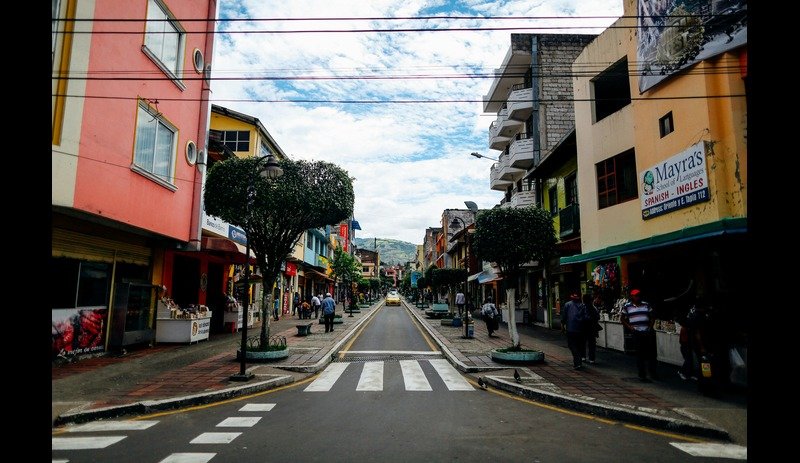
Ecuador, the tiniest among the South American countries, is sandwiched between Colombia and Peru, but it is the continent’s major diversity in terms of ecology, culture, and geography. A majority of the travellers go to Brazil or Argentina, which are the largest destinations; therefore, Ecuador remains almost unseen. Nevertheless, it has a wonderful nature, a lively Indigenous culture, and it is very rich in species.
What renders Ecuador underrated is the variety of experiences in its land and the easy access to such experiences.
Table of Contents
A Country Defined by Four Regions with Extraordinary Differences
Ecuador is further divided into four principal geographical areas, each of which provides something that makes the country resemble a small version of the whole continent.
1. The Sierra (Andean Highlands)
Ecuador is crossed by the Andes mountains, which creates scenarios of extreme altitudes, and at the same time, the different strong cultures are flourishing there. The city of Quito, which is the country’s capital, is situated at an altitude of more than 2,800 meters above sea level, and it is a blend of colonial style and modern architecture.
Another, the highest volcanoes of the world, Cotopaxi and Chimborazo, are also situated in the highland area. Hikers are one of the many visitors who come to Cotopaxi National Park, together with wildlife observers; they are drawn by the very rich and unique ecosystem made up of windy grasslands and animals that can survive extreme altitudes.
Sierra is a place where nature is spectacular, and traditions are still kept. Among the towns that are still very much like Otavalo, with its textile industry and Indigenous market that have lasted for ages, Cuenca is a city that stands with its Spanish colonial architecture. The highland zones signify the coming together of Ecuador’s ancient culture and European civilisation.
2. The Amazon (El Oriente)
The Ecuadorian Amazon rainforest provides a fantastic foundation for learning in terms of ecology and conservation of rainforests. Tourists will be able to get informed about the relationships of the systems that maintain the forest, the therapeutic properties of the Amazon plants, and deforestation as a danger.
The forests of Ecuador are still rather accessible, unlike other parts of the Amazon in South America that are quite difficult to reach, and tourists can enjoy the bizarre jungle nature without having to go through a long and hard journey.
3. The Coast (La Costa)
Ecuador’s Pacific coast invites you to experience its amazing places, such as beaches, fishing towns, mangroves, and rich soil. The coast is very important in the life of the nation, consisting mostly of agriculture and fishing.
For example, Puerto López is one of the cities that gives access to the whale protection area where its humpback whales come every year to have babies, and Manabí is known for the very old-style dining manners, which are included in making such dishes as ceviche and “bolón de verde” (plantains with cheese).
The coast, besides, has the famous Machalilla National Park, which contains both dry forest and tropical beaches, besides the Isla de la Plata, which is occasionally referred to as a cheaper option than the Galapagos to spot marine birds and sea life.
4. The Galápagos Islands
Sure enough, the Galápagos Islands are the most famous area of Ecuador. These islands, although very popular worldwide, do not have as many people regarding their volcanic science and ecology as being very important.
The Galápagos have been awarded recognition as a one-of-a-kind living laboratory for evolutionary biology, with marine iguana, blue-footed booby, and giant tortoise among the organisms that evolved in complete isolation.
A Cultural Mosaic Rooted in Indigenous Heritage
The cultural identity of Ecuador is greatly influenced and formed by the Indigenous nations that include Kichwa, Shuar, Waorani, and Otavalo communities, and they each have their own languages, crafts, and customs.
The country officially supports several Indigenous nationalities, and the majority of communities still have their own systems of governance, conduct their own agriculture, and celebrate their own festivals.
Spanish is the sole official language of the nation, while Kichwa and Shuar are spoken in considerable amounts in the highlands and the Amazon. Ecuador’s cultural variety is manifested in its textiles, music, food, and traditional healing practices. This infusion of various styles helps to understand the endurance and the richness of the Indigenous cultures.
A Biodiversity Hotspot With Global Importance
Ecuador is a megadiverse country, being one of the 17 nations that together have more than half of the world’s species. The small country is still gets to be one of the best places regarding the number of species per square kilometre, rich in El Niño and other climatic phenomena that influence the coast. The tropical rainforest of Ecuador is one of the most diverse places on earth.
Places like Mindo attract hundreds of birdwatchers every year due to their friendly location and large variety of species, while the páramo area supports wildlife that is extremely well adapted to high altitudes and hard conditions.
Ecuador’s vast and varied wildlife is a major factor determining the need for global conservation activities. One of the major activities done by the supporters of the project is to restore forests and help them through ecotourism. Also, the country is home to the most diverse and easiest habitats to study for learners interested in ecology.
Why Ecuador Remains Underrated
Ecuador is a small country that can be easily overlooked and underrated in terms of its variety of attractions, possibly due to the comparison with its big neighbours. However, it is totally wrong to think like that. Tourists in places that occupy a smaller area than many of the U.S. states can see the contrast between snow-peaked mountains, rainforests, and the ocean, all the way up to the famous Galapagos Islands.
This country is well-connected with its transport system, where travelling from one region to another is no hassle at all, and the cultures are still alive and very much rooted in the society.
For those who want to travel for the purpose of education, immersion, and meaning, the combination of biodiversity, the indigenous culture, and the diversity of geographic features makes Ecuador one of the most underrated yet the most rewarding places in South America.
If you enjoyed this post, Also you can checkout our latest video for more details.

👉 Ecuador: The Most Underrated Country in South America
FAQs
1. Is Ecuador safe for tourists?
When the usual travel precautions are taken, Ecuador is safe for visitors in the main tourist areas.
2. What is the best period to visit Ecuador?
Ecuador is a year-round destination. The ideal time for the highlands is June-September, for the coast it is December-April, and for the Galápagos it is December-May.
3. How can I get around in Ecuador?
You can travel easily by bus, take domestic flights to the Amazon, and fly to the Galápagos from the mainland.